História
Quinta da Coutada, located in Arcos de Valdevez, has documented origins dating back to the 18th century, connected to the rural and noble history of Minho.
Property History
Quinta da Coutada, located in Arcos de Valdevez, has documented origins dating back to the 18th century, connected to the rural and noble history of Minho. Over the centuries, it evolved from a hunting estate and agricultural space into a place of preservation, leisure, and deep connection with nature. Today, it preserves the memory of the land and the traditions that shaped this region.
Heritage
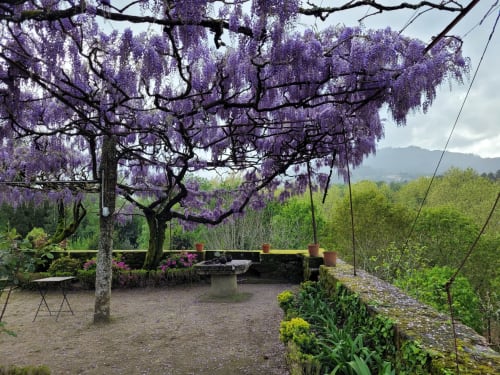
The Quinta da Coutada was originally a walled hunting estate, granted in the late 18th century by the landlord, the Marquis of Ponte de Lima, to Gaspar de Queiroz Almeida Vasconcelos. He built the present Baroque-style house, which still remains the central core of the property, preserving its original identity.
Legacy
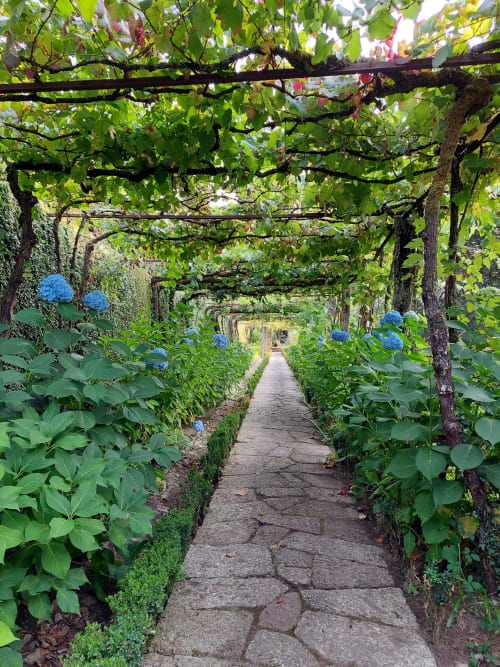
Over generations, the estate evolved into a space for leisure, agricultural production, and rural life. The formal gardens, surrounding woodland, and historic agricultural structures reflect this evolution, always maintaining a strong connection to the land and the traditions of Minho.
Local Legend
But long before documented history, the most enduring legend of this place was born. Going back to the 10th century, during the period of Muslim rule in the Iberian Peninsula, it is said that a young woman linked to a dignitary of Almansor lived near the Castle of Giela.
One summer day, she escaped to the banks of the Vez River, where she met a Christian knight. An impossible love was born between them, interrupted by war and separation.
Throughout her life—and according to legend, across centuries—she returned to the same place, waiting to see him again. Even today, it is said that at dusk, by the river, her silent figure can still be seen looking across the water.
She is known as the Moira of Giela.
One summer day, she escaped to the banks of the Vez River, where she met a Christian knight. An impossible love was born between them, interrupted by war and separation.
Throughout her life—and according to legend, across centuries—she returned to the same place, waiting to see him again. Even today, it is said that at dusk, by the river, her silent figure can still be seen looking across the water.
She is known as the Moira of Giela.